
Loading cart contents...
Trophies by Graham Mort
Gangs of swifts were screaming through the village and past my window here in North Yorkshire as I began this essay a few weeks ago. They are powerful symbols of spring and renewal, but I always watch them with a certain anxiety. This year, sparse early numbers came good as the weather warmed and the birds found nesting places to breed in.
In recent years, the bird population here has shown signs of recovery. Buzzards are now a common sight over the village, though I never saw them when we first moved here in the 1980s. Farmers are leaving more fields unmown for longer, so ground-nesting birds have been spared those early cuts of silage. There are more curlews and lapwings this year and they’ll have more opportunity to raise their young, rather than mourn them above those shaved meadows. Other species should benefit too, the insects, hedgehogs, hares and rabbits that have become such a rare sight.
I worked in sub-Saharan Africa for many years and I’ll never forgot my first visit, stepping from the plane onto scalding tarmac at Jomo Kenyatta airport, to find a sky full of migrating swifts. I wondered if they were on their way to my home here in northern England. Swifts have been returning to the village for centuries and our old stone-built cottages have provided space under the eaves for them to breed, just as martins and swallows have been able to build their nests in quiet corners and alleyways. Our awareness of what we call ‘nature’ has entered a new era through the intensification of climate change and its accompanying anxieties. More and more people are realising the need to conserve space for wildlife. From 2027, swift bricks will be mandatory in all new Scottish homes; hopefully England will follow soon.
It’s good to have some positive news when there has been so much concern about declining species and climate change – its rising temperatures, droughts, heath fires, floods and persistent high winds as pressure systems trade volatility. Our village has a parish magazine and an enthusiastic columnist provides monthly articles, focusing on that elusive and often sentimentalised concept of ‘nature’. I think its author would acknowledge that ‘nature’, as well describing a bucolic ideal, also includes humans and the pathogens and parasites that infest us along with other birds, fish and mammals. In a shrinking world where humans can now pick up and transmit zoonotic diseases, we are experiencing a kind of counter-anxiety – the realisation that we are getting far too close to nature.
Once eradicated in North America and Mexico through sterile insect dispersal programmes, the screw worm has gradually returned. The flies lay their eggs in small cuts and abrasions on animals and the eggs hatch into worms that literally eat cattle alive. I remember listening to a debate between a vegan and a sheep farmer. The vegan’s argument was to let nature alone (good point). The farmer asked if she knew how a sheep would die in the wild: infested by parasites, crippled by foot-rot, a prey to crows that would devour its eyes before it died. The parasites, the pathogens, the scavenging crows, are all aspects of what we call nature. But the farmer’s question removes the presumption that ‘nature’ (like ‘culture’) has some kind of inherent virtue. It is, of course, DNA trying to replicate itself and evolving to do so.
There’s something about human interactions with the so-called natural world that is akin to appropriation. Very little of the UK could be called truly ‘wild’ after centuries of grazing, cultivation and industry. In my village, a small area of land next to the river has been planted as an orchard. It’s nice to sit beside the river, so picnic tables have appeared. There’s a handy parking space opposite the tennis court. River paths make it a good place to walk your dogs. When the orchard was established, two large noticeboards appeared to enumerate the wild species that we could expect to encounter, illustrated by photographs. I feel a paradox here, a tension between the enthusiasm of villagers to create a facility for nature to expand and an instinct to colonise.
One morning I spoke to a neighbour who has created some neat holes in his gable end for swifts to nest in. There they were, entering and emerging from them, chattering as they scooped insects from the air. My neighbour has installed a video camera so that his family can watch the birds at all times of the day or night. Just as peregrine nests or gannet colonies are likely to have a video feed that can be watched from a hide or visitor’s centre. That can be a thrilling experience and must have got new generations of children interested in, well, nature.
Increased environmental awareness might have a few rough edges, but surely, it’s a win-win for human and wild species? In many areas of science, there is the concept of the ‘observer effect’ – an unintended influence brought about by the presence of observation that can distort what scientists are looking at. The effects on our relationship with nature can be more obvious than measuring light particles or studying thermo-dynamics. Years ago, in St James’ Park in London, I remember seeing squirrels that actively approached me rather than hiding. More recently, our local nature correspondent, told me how delightful it was that deer in a patch of local woodland seemed unafraid of humans. That piece of woodland has been deliberately established as a living elegy for someone who died, so it has been carefully created and curated, each species of tree deliberately chosen in memoriam.
I’m reminded of a clip of David Attenborough in Australia where he films the lyre bird. The bird accurately replicates the sound of camera shutters and their auto re-wind, as well as that of chain saws and car alarms. There is something astonishing about this ability. It’s also ironic, because the first reaction of observers is that they themselves are being observed. Audible observation and other human activity have clearly modified the bird’s behaviour. Comically, we imagine the bird thinking: ‘Hmn, that’s nice! I wonder if that could get me a mate or warn off other birds?’ But we also find it sad to hear the echo of humans – especially that chain saw – in wild places.
Back to those swifts and the 24/7 surveillance system that watches them. When I told a friend, she said, ‘That’s creepy! Can’t they have any privacy?’ On the surface that seems an anthropomorphic response. Privacy for wild birds when we’ve been generous enough to create space for them? Of course, symbiosis in nature takes many forms as Melvin Sheldrake has shown in his book, Entangled Life[1], but the quid pro quo here is a peculiarly human form of gratification. There is no such thing as a free nesting place. Those swifts can now be called ‘our’ swifts (or ‘their’ swifts) through the transactional obligations of hospitality.
Swifts, as far as we can know, are unaware of our curiosity. Because they can now be revived from hard-drives and cell phones, I wonder what their relationship with us will become? Will we cherish the ‘real’, living thing, or will the real thing begin to lose its vivid presence? The urge to film and photograph is an apparently benign way of ‘capturing’ nature but it is also a way of displacing it, so that it is ‘seen’ rather than fully experienced, the camera lens continually mediating its presence. I remember the feeling of swifts brushing past my face in an Italian village. I think back to those tamed squirrels that have lost the instinct to fear us, of gulls that are learning to read human behaviour as they anticipate their next meal, about deer eating meekly from our hands.
There are now serious debates about the concept of privacy as applied to animals, ethical arguments that consider the possibility of harm proceeding from observation. Animal behaviour is always subject to the interpretations of our own human behaviour. Just as humans can never really know what another human thinks, so humans can never really know how an animal thinks. Scientific research is revealing more and more about non-human communication – the way species recognise individual members of their social group and what their carefully recorded communications systems may mean. Sperm whale pods speak in dialect, dolphins and elephants identify each other through ‘call-signs’. The barrier between human and non-human is being dissolved into a complex continuum.
The story of Genesis was once interpreted as a true historical narrative, until the geologists arrived with their hammers and scientific curiosity. Now Genesis seems like a passable metaphor for human evolution. The narrative moves from freedom and innocence, to one of temptation, transgression, guilt, and self-consciousness, leading to murder and familial division. Adam and Eve’s transgression brings about shame and the need for privacy. This concept of ‘original sin’ has endured for thousands of years, and there is something inherently redemptive and comforting about a flaw in our nature that only God can forgive.
Swifts may be unaware of the video camera, the eye of God, watching them. My own misgivings may be merely a projection of my own human shyness. But what is really bothering me, when scientific research and the very preservation of species may depend on such close and meticulous observation? My unease seems paradoxical – and conflicting realities are hard to accommodate. I have misgivings about ‘the observer effect’ but maybe that can be adjusted for in any experiment. Maybe it can be taken into account by humans on behalf of their non-human subjects. What really disturbs me are the acts of appropriation that accompany human observation.
In 1963 the Bronx Zoo advertised ‘the most dangerous animal in the world’. Audiences congregated to find a mirror showing themselves. In 1851 and 1924, large-scale exhibitions in London were held to promote the pacifying and progressive nature of the British Empire. Exhibits featured living natives and their lifestyles. In effect, humans were exhibited alongside cultural artefacts, like animals in a zoo: The exhibitions made colonised subjects objects of curiosity, reinforcing a racial hierarchy. Yet those subjects made objects were undoubtedly, human. Human yet ‘other’. For the curators, that otherness was a manifestation of humanity beyond the redemption of Christian values.
Human beings possess an insatiable curiosity that can reveal the intricacies and scale of nature, and simultaneously destroy it. In his poem, ‘Against Looting’, published in 1987, the poet David Craig made a plea for that possessive curiosity to be curtailed, for the living wonders of nature to be left untouched: ‘…Leave them in memory of the slaves/Stowed like carcases in the holds/In memory of the elephants chained and swaying, /In concrete hangars, in memory of the gorilla/Counting the links of his chain.’[2] The political stance of the poem is rhetorical, its questions doomed to endlessly reverberate. David Craig knew that, but just as we ask questions of nature, so we ask questions about our own place within nature, reflection being a quintessentially human characteristic.
Current developments in AI have renewed our curiosity about human nature through speculation about AI’s so-called ‘consciousness’ Those questions are cognate with other questions about the kind of consciousness that animals may possess. One fault line in debates about AI is that it’s a mechanical system that mimics consciousness. It does not (yet) possess proprioception, the bodily sentience that makes human beings constantly and simultaneously aware and reactive to their environment. Yet all animals are sentient, if not necessarily consciously aware – even single-celled organisms receive stimuli and respond to it.
Those swift-boxes hang like trophies under the eaves of my village. I’m not questioning scientific research, the helping hand that is needed to maintain balance in nature, but I am questioning how heavily we should lean on the scales – and I’m dubious about Stasi-style surveillance reducing animal behaviour to mere entertainment.
***
Graham Mort has published ten books of poetry and three collections of short fiction as well as writing poetry-based drama for the BBC. He also writes essays and flash fiction. He is emeritus Professor of Creative Writing and Transcultural Literature at Lancaster University and lives in North Yorkshire. A new book of short fiction, Émigrés, will be published by Cōnfingō Publications in 2027. Follow him on Bluesky (@grahammort.bsky.social) and read more about his work on his website.
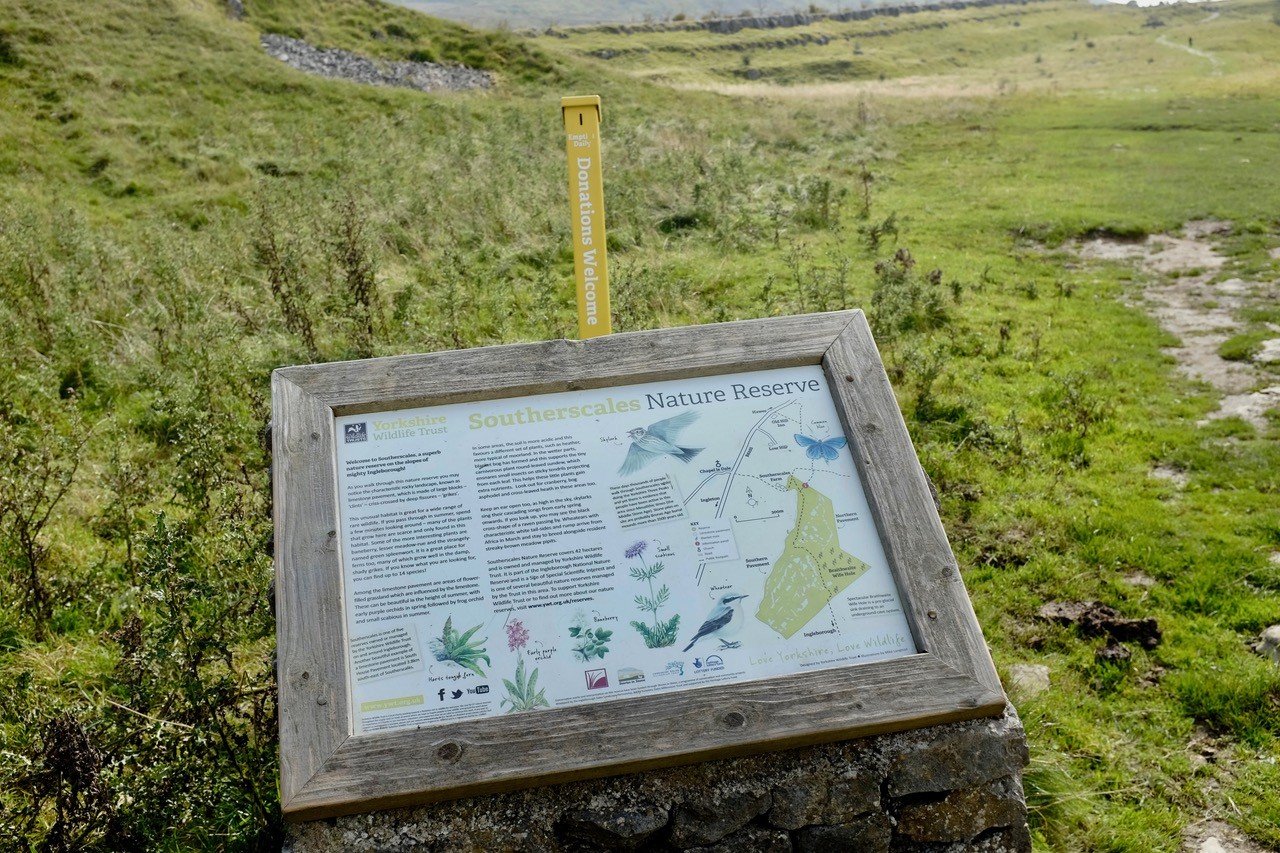
The photograph at the head of this essay is by the author.
[1] Sheldrake, Merlin, Entangled Life: How Fungi Make Our Worlds, Change Our Minds and Shape Our Futures, 2020, Bodley Head, London.
[2] Craig David, Against Looting, 1987:p8, Giant Steps Press, UK.